





Adhering to the standards, after cleaning the walnut, it is necessary to calibrate the kernel in accordance with the requirements of international standards: the highest grade may contain halves and quarters, but the amount of the quarter should not exceed 10%. Kernels of the first grade allow the content of parts with a size of 1/8 not more than 15% by weight.
Walnut kernel category
The walnut kernel is classified into 5 categories, from whole halves to small crumbs:
1. Halves (butterfly). This category includes kernels, 80% of which are halves, as well as a nucleus three quarters of a half in size, the rest of the mass consists of quarters.

2. A quarter is pieces of the kernel that are not sifted into a sieve with round holes and a diameter of 11 mm.
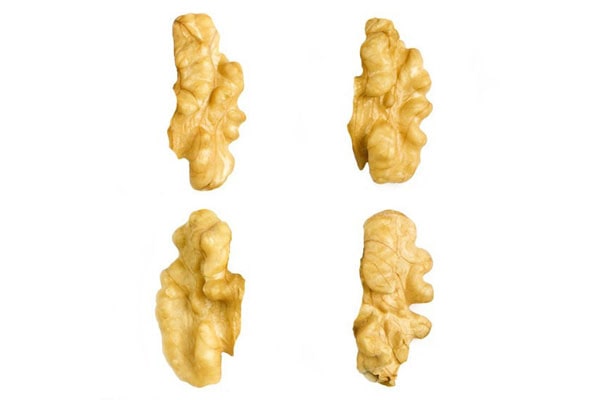
3. Mix. The composition of this category of the kernel includes 30% of the halves (butterfly), the remaining assortment of the kernel takes a quarter and eights.
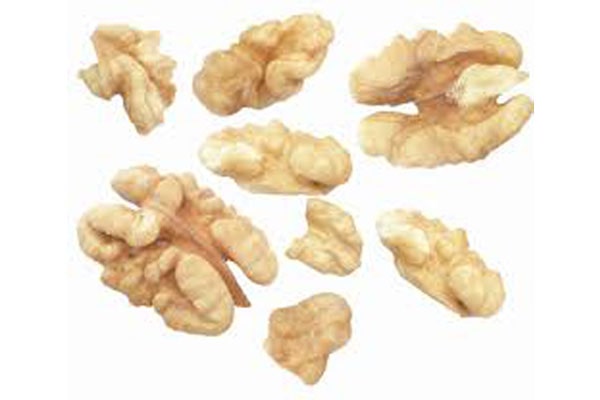
4. Eight. This kernel category consists of pieces that passed through a sieve with round holes and a diameter of 11 mm, but at the same time not sifted into a sieve with a diameter of 3 mm. Eights, as a rule, are divided into two sizes: 3-6 mm and 7-10 mm. These pieces of walnut kernel are used in confectionery and baking.

5. Crumbs are tiny pieces of walnut kernels, the size of which does not exceed 3 mm, the appearance resembles powder or flour. The crumb is used in the confectionery industry, namely: it is added to the dough, ice cream is sprinkled, cakes, pastries, as well as nut fillers are prepared from crumbs.

Walnut sorting in large volumes is performed by a vibrating sieve – calibrator, the installation separates the kernel from 3 to 5 fractions, the productivity of this equipment is 200-700 kg / hour. Vibrosieve – the calibrator is also equipped with an aspirator, which blows small pieces of shell, membrane and debris. In domestic conditions, the nut is sorted manually immediately after shelling.
Sort walnut kernels by color
Sorting the kernel by color is an equally important stage. After peeling the nut, each buyer in search of a light kernel. Everything is simple – the lighter the kernel, the more expensive it is, the light kernel is most appreciated and it is easy to sell.

International kernel color requirements:
A: very bright. The content is allowed no more than 15% (by weight) of darker nuts than [A] very light, of which no more than 2% can be darker than [B] light.
B: light. The content is allowed no more than 15% (by weight) of darker nuts than [B] light, of which no more than 2% can be darker than [C] slightly dark.
C: slightly dark. The content is allowed no more than 15% (by weight) of darker nuts than [C] slightly dark, of which no more than 2% can be darker than [D] dark.
D: dark. The content is allowed no more than 10% (by weight) of nuts, even darker.
On a production scale, nuts are sorted on inspection and bulkhead tables.
Walnut moisture
Another requirement for the state of the walnut is humidity. According to standards, the moisture content of the walnut kernel should not exceed 7%, and the whole walnut should not exceed 10%. The moisture content of a freshly harvested nut is up to 45%, respectively, to bring it to the desired state, drying is required. As a rule, drying of the nuts in shell is carried out under normal conditions of an indoor, ventilated room.
It is possible to significantly speed up the drying of a walnut in shell using drying equipment – drying ovens and bins.